

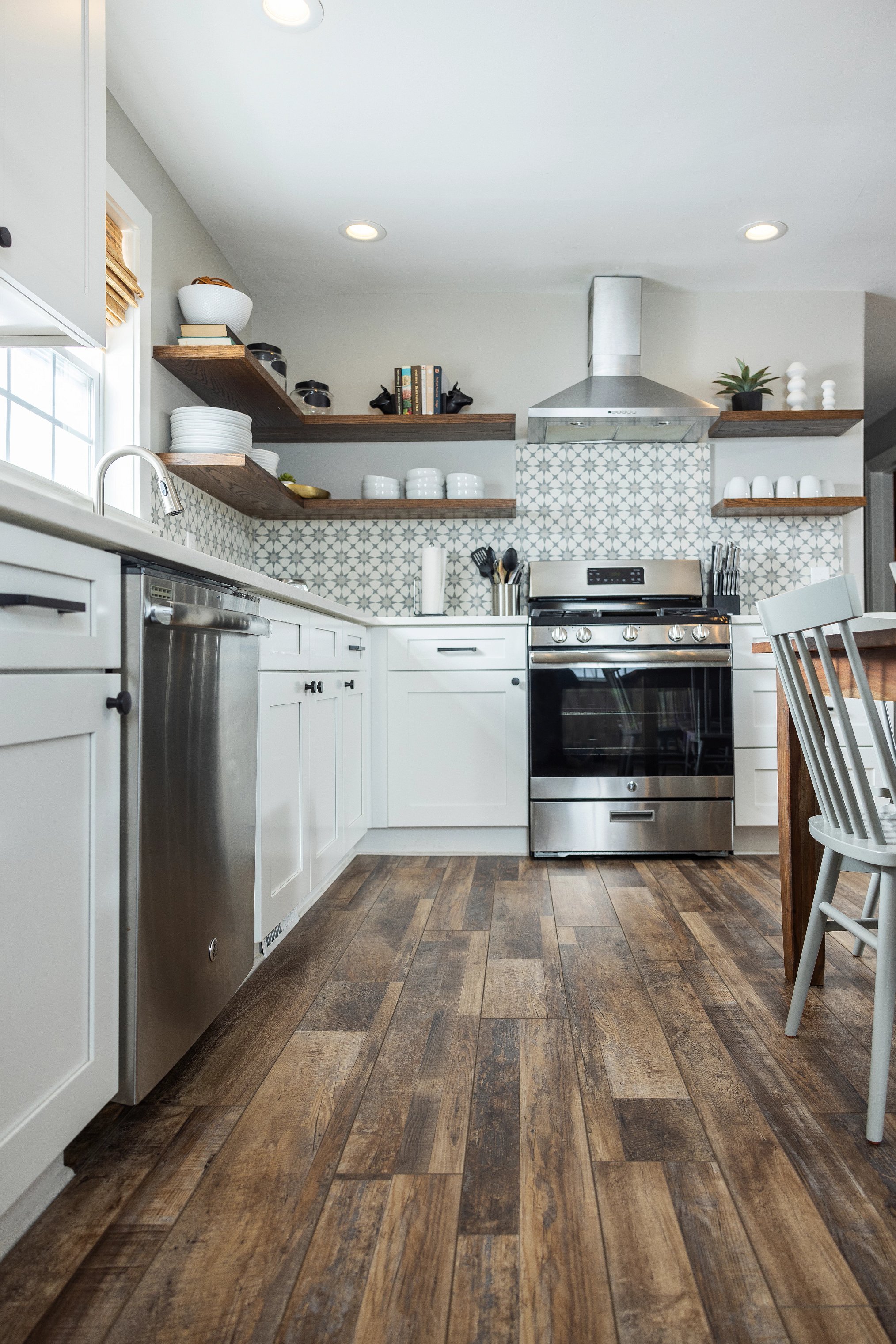
You probably spend more waking hours in your kitchen than any other room, which is why choosing cabinet doors can suddenly feel like a high‑stakes decision. The style you pick will shape how your home looks from the open living room, how easy everything is to clean, and even how “current” your kitchen feels a few years from now.
Below, we’ll break down the major cabinet door styles in plain language, with pros, cons, and a few tips on what tends to work best in today’s Charlotte‑area homes.
Shaker: The Modern Classic That Fits Almost Anywhere
If you’ve saved even a handful of kitchen photos, chances are you’ve pinned Shaker doors. They’re the ones with a simple frame around a flat center panel—clean but not cold.
Why homeowners love them:
- Timeless look. Shaker sits comfortably between traditional and modern, so it works in everything from a brick ranch to new construction with an open floor plan.
- Easy to coordinate. These doors pair well with almost any countertop, from quartz to butcher block, and with a wide range of flooring, whether you lean toward engineered hardwood that handles humidity swings or something more budget‑friendly.
- Low visual clutter. In open layouts, the simple lines help the kitchen blend with nearby living spaces instead of shouting for attention.
When we guide homeowners through our kitchen cabinet selection and installation, Shaker is often where we start, because small changes in color, hardware, and edge profiles can push it more farmhouse, more contemporary, or somewhere in between.
Slab and Flat-Panel: Clean, Contemporary Lines
Slab doors are exactly what they sound like: a single, flat panel with no framing. They’re a favorite in modern and Scandinavian‑inspired kitchens around Harrisburg because they create long, unbroken lines.
Consider slab fronts if you:
- Prefer a minimal, modern feel with very few visual breaks.
- Want to highlight other elements—like a bold backsplash or dramatic porcelain tile for entries and baths—without the cabinets competing.
- Need easier cleaning. With no inner corners, a quick wipe clears away cooking splatters.
Flat‑panel doors can show fingerprints more on dark, glossy finishes, especially in busy family kitchens. If you love the look but worry about maintenance, we’ll often steer you toward a matte finish and hardware that keeps hands off the door face.
Our online tool that lets you preview kitchen styles before you commit is especially helpful here—you can see how slab doors change the whole room compared with Shaker or more detailed options.
Raised-Panel and Traditional Profiles: Warm, Detailed, and Classic
Raised‑panel doors have a center panel that’s thicker than the frame, usually with more curves and routed details. They’re common in more traditional homes and can feel especially cozy in smaller kitchens.
They’re a strong fit if you:
- Want a richer, more formal look with architectural detail.
- Are working with existing trim or furnishings that lean traditional and want the kitchen to match.
- Prefer warmer stains that show off wood grain.
Because these profiles have more nooks and crannies, they can take a little extra effort to keep dust‑free. We often talk through cleaning expectations during a whole‑kitchen renovation conversation so you’re not surprised later by how much time your new doors may need.
If you’re pairing detailed doors with patterned floors, we’ll usually recommend something simpler underfoot, like wood-look luxury vinyl, so the space feels intentional instead of busy.
Glass, Open Frames, and Mixed Styles: When to Mix It Up
You don’t have to choose one door style and repeat it everywhere. Thoughtful mixing can give your kitchen personality and help it function better.
A few guidelines we often use in Concord‑area projects:
- Glass inserts work well for upper cabinets where you display dishes or glassware. They lighten up the room, but you’ll want to be comfortable with what’s visible.
- Open frames or mullions can break up long cabinet runs and draw the eye upward, especially with taller ceilings.
- Accent styles on an island or pantry wall—such as Shaker on the perimeter and a more detailed door on the island—add interest without overwhelming the room.
When you’re considering combinations, it helps to look at everything together: doors, hardware, counters, and flooring. Many homeowners use our solid-surface countertop options as a starting point and then refine door details and finishes around that centerpiece.
Understanding cabinet door styles is the first step toward a kitchen that feels like it truly belongs in your home. If you’d like help narrowing down profiles, finishes, and how they’ll coordinate with your floors and counters, our team can walk you through samples in the showroom or right at your home. When you’re ready, you can request a free in-home estimate and start designing a kitchen that fits the way you live every day.


