

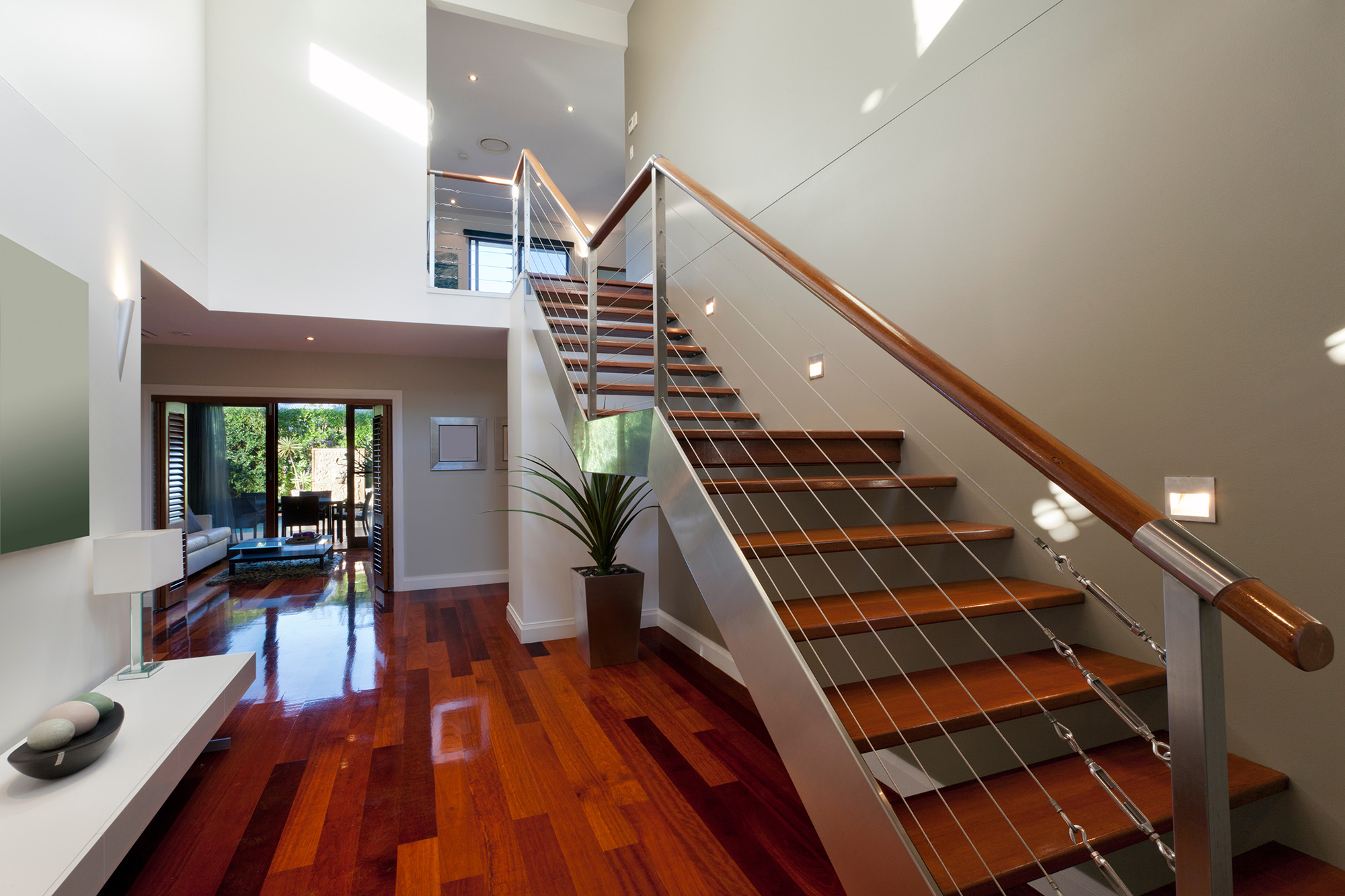
You walk in the front door with groceries, the dog racing ahead, kids thumping up the stairs, and you notice it again: those builder-grade treads are scratched, noisy, and don’t match the new floors you just put in downstairs. For many homeowners, the staircase is the one area that still feels “unfinished” — even after a big flooring upgrade.
Luxury vinyl plank (LVP) has become a favorite for main living areas, and it can work beautifully on stairs too when it’s chosen and installed the right way.
Is Luxury Vinyl a Good Idea on Stairs?
Stairs get a different kind of abuse than flat rooms. Every step is a concentrated impact, and shoes hit the edges of treads first. That’s why material choice matters more here than in a spare bedroom.
Quality LVP is a strong option because it combines a durable wear layer, good traction when installed correctly, and designs that flow with the rest of your home. Many of the wood-look LVP collections in our showroom let you carry the same color from your entry or hallway right up the staircase so everything feels intentional instead of pieced together.
In our humid Piedmont climate, a rigid core is also a plus. Rigid-core planks are more dimensionally stable, which helps keep stair nosings tight and clean over time. If you’re comparing products, it’s worth browsing a few rigid-core vinyl options to see how they differ from flexible glue-down styles.
Key Design Choices: Planks, Treads, and Nosing
Once you know LVP is on the table, the next step is deciding how you want your stairs to look and feel.
Some products are made to wrap each tread and riser with individual planks, while others offer matching stair treads or caps. No matter the format, the nosing (the front edge you see from below and feel underfoot) has to be solid, safe, and attractive. That’s where professional installation really earns its keep.
If you’re planning continuous flooring from the foyer into nearby rooms, it can help to look at your staircase in context with nearby surfaces. Many homeowners like to compare potential stair colors with surrounding tile or stone in baths and entries, and a quick scroll through the tile and porcelain gallery can spark ideas for how the whole level might coordinate.
For visual thinkers, snapping a photo of your existing stairs and using the room tool to preview new floors in your space can make it easier to picture how a darker tread, lighter riser, or bolder grain pattern will change the feel of the staircase.
Safety, Noise, and Everyday Comfort
A beautiful staircase still has to be safe and comfortable. That comes down to three big factors: traction, noise, and maintenance.
Not all vinyl textures are equal underfoot. On stairs, we generally favor planks with some texture or embossing so they’re less slippery in socks. Many of the waterproof plank choices also offer grippy finishes that are forgiving when someone comes in with rain on their shoes.
Noise is another concern, especially in two-story homes where footsteps echo into bedrooms. A solid substructure, proper underlayment where appropriate, and tight installation around the nosing all help reduce that hollow “clack” some people associate with hard stairs. In certain layouts, homeowners choose to keep carpet on a basement or bonus-room staircase for extra softness while using LVP on the main run; if that appeals to you, you can compare textures in the carpet selection for high-traffic areas.
Day to day, luxury vinyl is straightforward to clean. That matters when red Piedmont clay or pet hair tends to collect on steps first. A quick vacuum with a brush attachment and an occasional damp mop usually keeps staircases looking crisp without special products or tools.
Planning Your Stair Upgrade With a Local Team
Stair projects are more technical than a typical rectangular room, so it helps to partner with an installer who works with these materials all the time. Our Harrisburg-based crew handles both the product selection and the detailed cutting, fitting, and finishing that make the difference between “DIY-ish” and “this looks like it was always here.”
If you’re already thinking about updating nearby rooms — maybe tying the stairs into an upstairs hall with matching planks or coordinating with tile in an adjacent bathroom — it can be helpful to look at several flooring types side by side and plan the whole level at once rather than one piece at a time.
When you’re ready to talk through options, we can bring samples to your home, look at your staircase construction, and help you decide which LVP style and stair treatment make the most sense. The easiest way to get started is to request a free in-home estimate and schedule a time that fits your day.


